
What Does an Interior Designer Actually Do? (And When Should You Hire One?)
Most people think interior designers choose paint colours, select furniture, and make spaces “look nice.” And while aesthetics are certainly part of the process, they are only one layer of what we actually do.
Interior design is not simply about styling a finished room — it is about shaping how a space functions, flows, and supports the way you live or work. It involves strategic planning, technical knowledge, and thoughtful decision-making long before the final pieces are installed.
There’s often confusion around when a designer is necessary, what the process truly involves, and whether hiring one is reserved only for luxury projects. The reality is far more nuanced — and far more valuable — than most people realize.
Interior Design Is More Than Decorating
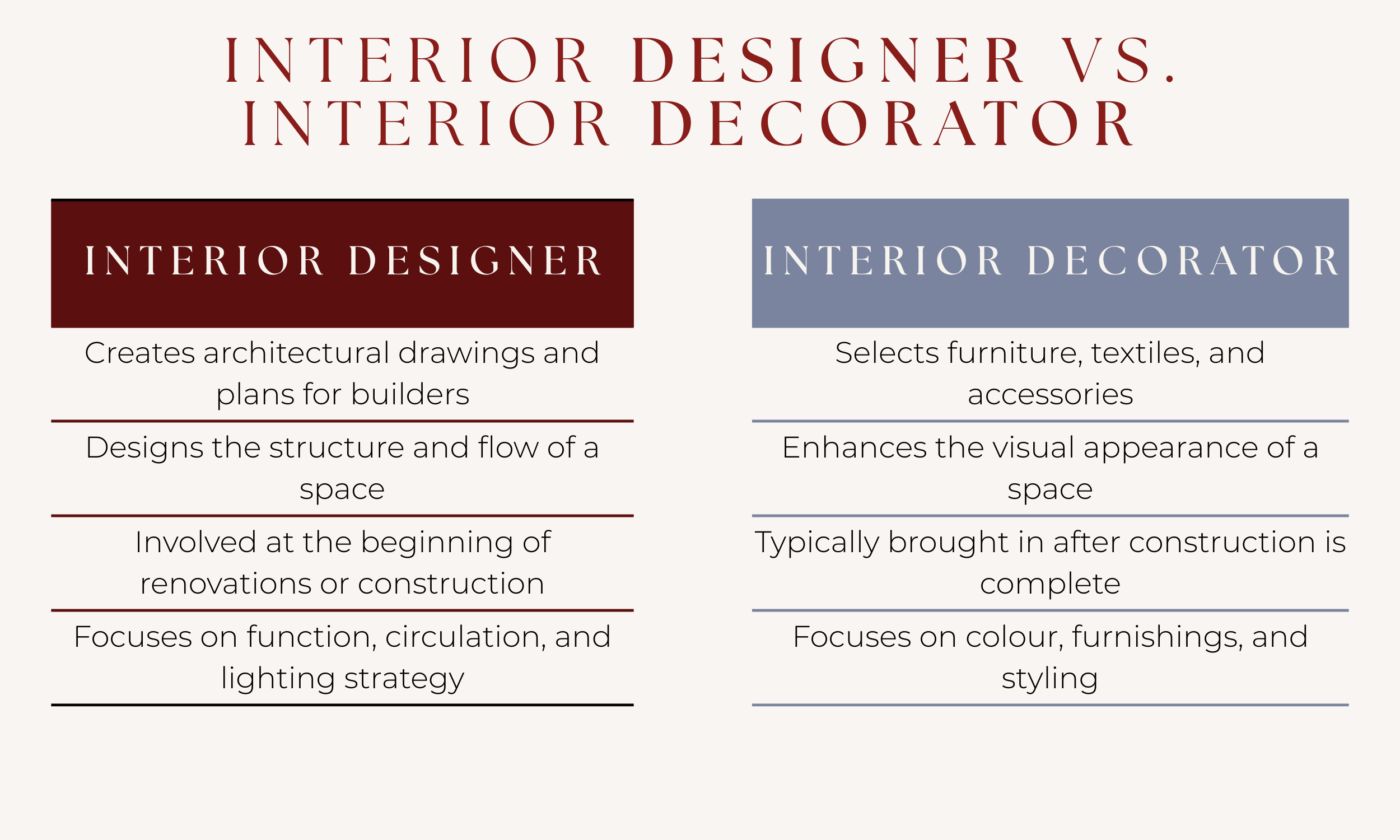
One of the biggest misconceptions about interior design is that it’s the same thing as decorating. While the two are related, they serve very different purposes.
Decorating focuses on the surface layer of a space — furnishings, artwork, accessories, styling, and colour choices. It enhances a room that already functions well. It’s about refining what’s there and making it visually cohesive.
Interior design, on the other hand, begins much earlier in the process.
It considers how a space is structured and how it performs. This includes space planning, layout optimization, lighting design, material selection, and ensuring that every element works together both visually and practically. A designer evaluates how people move through a room, how natural and artificial light interact, how storage is integrated, and how finishes will hold up over time.
In other words, decorating makes a space look beautiful. Interior design makes a space work beautifully.
When done well, you don’t just notice how a room looks — you feel how seamlessly it functions. The flow feels natural. The proportions feel balanced. The lighting feels intentional. That level of cohesion doesn’t happen by accident; it’s the result of thoughtful planning and informed decision-making.
What Happens When You Work With an Interior Designer?
Many people are surprised to learn how structured and strategic the design process actually is. Working with an interior designer isn’t just about picking finishes — it’s about moving through a clear series of phases that build toward a cohesive result.
While every project is unique, most follow a similar framework.
Discovery & Vision
Every project begins with understanding you.
This phase focuses on how you live, what isn’t working in your current space, and what you want to achieve. It also includes discussing budget, timeline, and overall priorities. Establishing clarity at the beginning prevents costly revisions later.
Design is most successful when it reflects both lifestyle and intention.
Space Planning
Before selecting a single material or piece of furniture, layout comes first.
Space planning involves determining how rooms will function, how furniture will be arranged, and how circulation flows from one area to another. Proper scale, proportion, and clear pathways are essential. A beautiful room will never feel right if the layout doesn’t work.
This is often where the biggest transformation happens.